

How Is Google Maps Ranking Determined? Relevance, Distance and Prominence
Google ranks local results by relevance, distance and prominence. We explain what the three factors mean and which of them you can influence.
By BadePlus
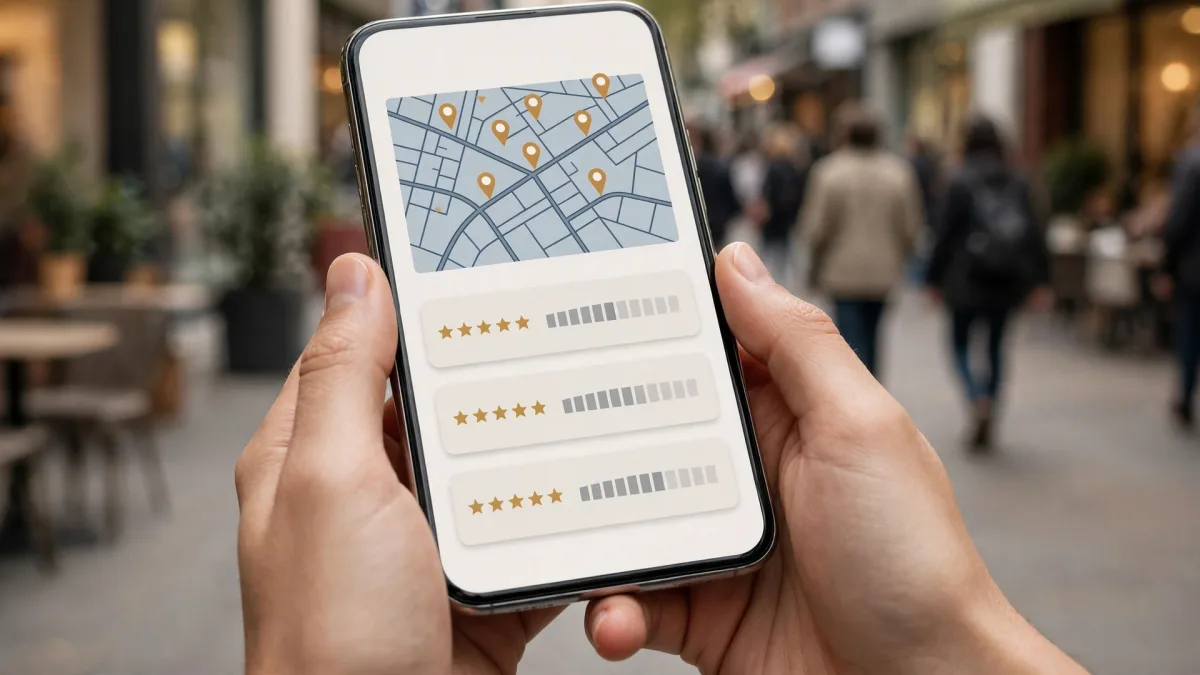
Images are AI-generated.
"Why does another business show up before mine on the map?" is one of the questions local businesses ask most. You can find long lists of Google Maps ranking factors online, but most rest on observation and guesswork. Google explains the topic on its own help page with three factors: relevance, distance and prominence.
In this article we present only what Google's official help pages say as definite information and mark every observation as "observation." That gives you an unexaggerated answer to how local ranking is determined and a clear picture of what you can and can't influence. The map side of search engine optimization (SEO) also revolves around these three factors.
The three factors Google explains
According to Google's tips to improve your local ranking page, local results are based mainly on relevance, distance and prominence. Together, these factors help Google find the best match for a search. The same page adds two important points:
- It's not possible to request or pay for a better local ranking on Google.
- Google keeps the details of its search algorithm confidential to make the ranking system as fair as possible for everyone.
Relevance: how well does your profile match the search?
Relevance refers to how well a Business Profile matches what someone is searching for. Google's advice is clear: provide complete and detailed business information so it can understand your business better and match it to relevant searches.
Google's other help pages also point to fields that feed relevance:
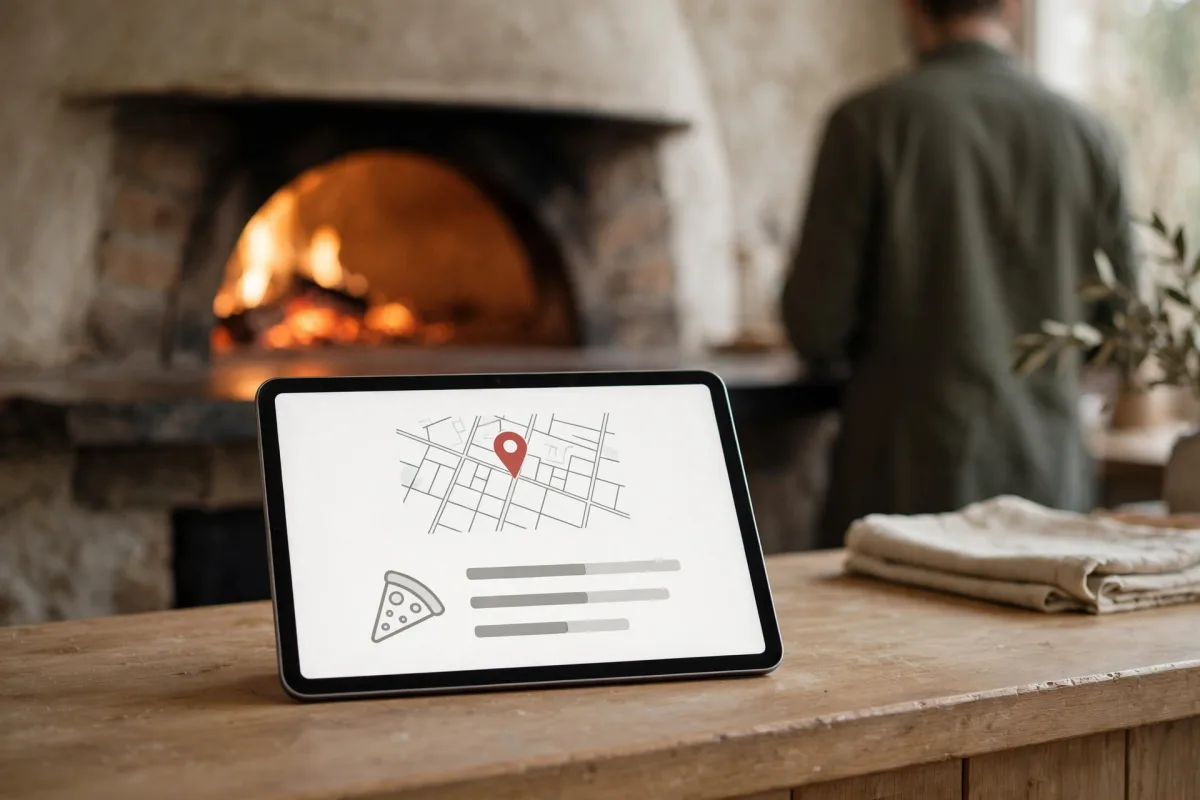
- Category: According to Google, the categories you choose affect your local ranking. In Google's example, a business whose primary category is "Pizza restaurant" may be shown to users searching for restaurants, Italian restaurants or pizza.
- Attributes: When you add certain attributes, your business may be shown in searches for places with those attributes.
- Address and hours: In Google's own example, a hair salon that provides its address and opening hours may be shown for searches such as "hair salons near me" or "hair salons open now."
Distance: where the searcher is
Distance refers to how far each business is from the person searching. If the user doesn't share their location, Google uses what it knows about where they are.
The practical result: there's no single "Google Maps ranking" figure. The same search can return different results at opposite ends of the city. Appearing near the top when you search from inside your own premises doesn't mean a customer a few kilometers away sees you in the same place.
Distance is a factor you can't influence; you can't decide where the searcher is. What you can do is make sure your address and map pin are correct. If you go to customers, define the areas you serve correctly; but showing a virtual office or PO box address when you have no real place of business breaks the rules.
Observation: the way to see how your ranking changes with location is to search not from one point but from many points spread around your business. How to read the results is explained in our article local ranking analysis with a heat map.

Prominence: recognition and reviews
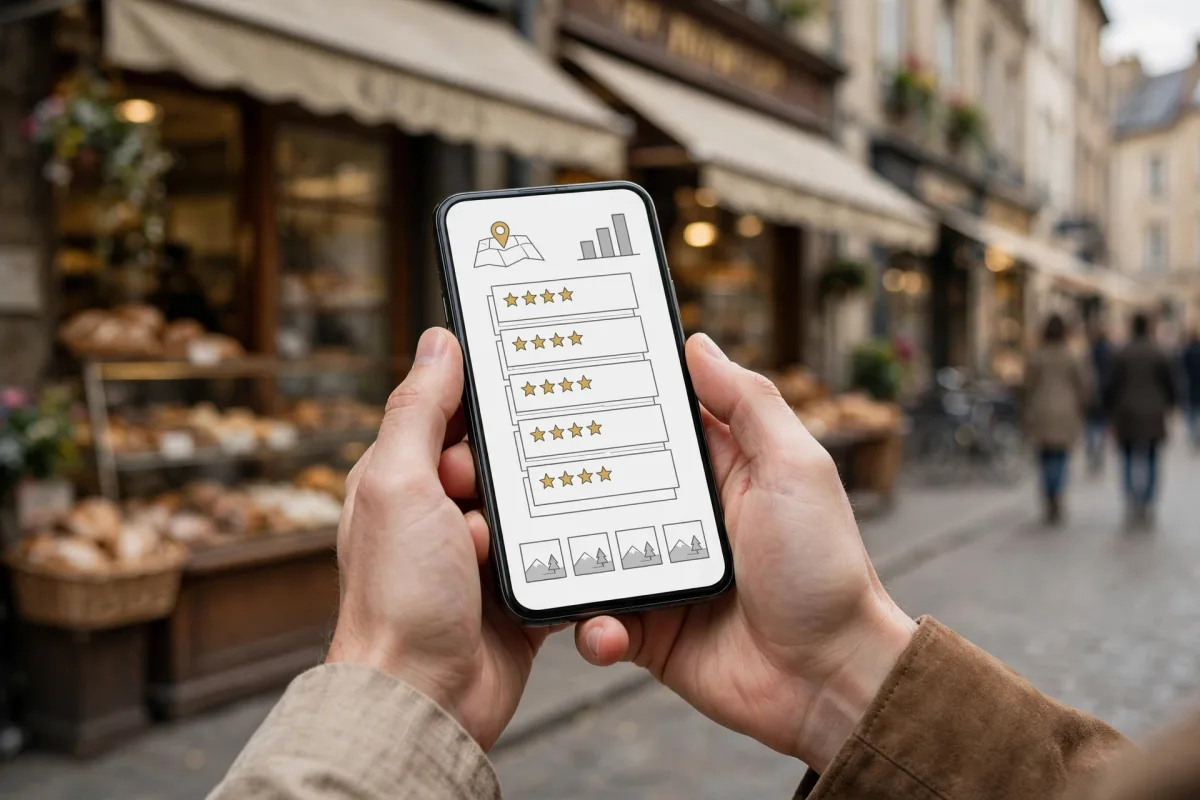
Prominence (the term Google uses in its help pages) refers to how well known a business is. According to Google, prominent places are more likely to be shown in search results. This factor rests on information such as the number of websites that link to your business and the number of reviews you receive. Google also states plainly that more reviews and positive ratings can contribute to local ranking.
Google's recommendations on the same page relate directly to prominence:
- Reply to reviews: Positive reviews and helpful replies can help your business stand out.
- Add photos and videos: They show what you offer and tell your business's story.
- Verify your business: Verification tells Google you're authorized to represent the business; according to Google, this makes it more likely to be shown in search results.
Observation: businesses that have been operating for a long time, are well known locally and have real content about them online often seem to have an edge on this factor. Google doesn't give details on this.
What you can and can't influence
Putting the three factors together gives this picture.
What you can influence:
- Profile completeness: category, description, services, attributes, hours, photos
- Accuracy and freshness of information: address, pin location, phone, special hours
- Profile verification
- Regular, helpful replies to reviews
- Asking for reviews within the rules
- Real recognition: your website's content and real sources that mention your business
- The searcher's location
- The details of Google's algorithm and the weight of the factors
- Other businesses' profiles
- Ranking through payment or request (not possible, according to Google)
No one can make a firm promise about rankings; ranking is Google's decision. What you can do is work steadily on the areas you can influence and measure the results correctly. Our guide how to rank higher on Google Maps covers the steps in detail. On the measurement side, BadePlus's map rank tracking shows, as a heat map, your business's rank for the keyword you choose at every point of a 7×7, 9×9 or 13×13 grid around it; so you see the effect of distance without relying on a single search.
Frequently asked questions
Can I improve my ranking by paying?
No. According to Google's help page, it isn't possible to request or pay for a better local ranking.
Why does my ranking change during the day?
Because the distance factor depends on where the searcher is, searches from different places give different results. As in Google's hair salon example, opening hours can also affect results for "open now" searches. As an observation, results also shift over time as profiles change.
Summary
- According to Google, local results are determined mainly by relevance, distance and prominence.
- Relevance is fed by complete and accurate information, prominence by real recognition and reviews; distance depends on where the searcher is.
- A better local ranking isn't possible through payment or request, and the details of the algorithm aren't disclosed.
- Measure your ranking not with a single search but from different points around your business.