

Measuring Your Google Maps Ranking Accurately: Why Location Matters
Why can't you check your Google Maps ranking from one phone? How your rank shifts with location, and how to measure it accurately from different points.
By BadePlus
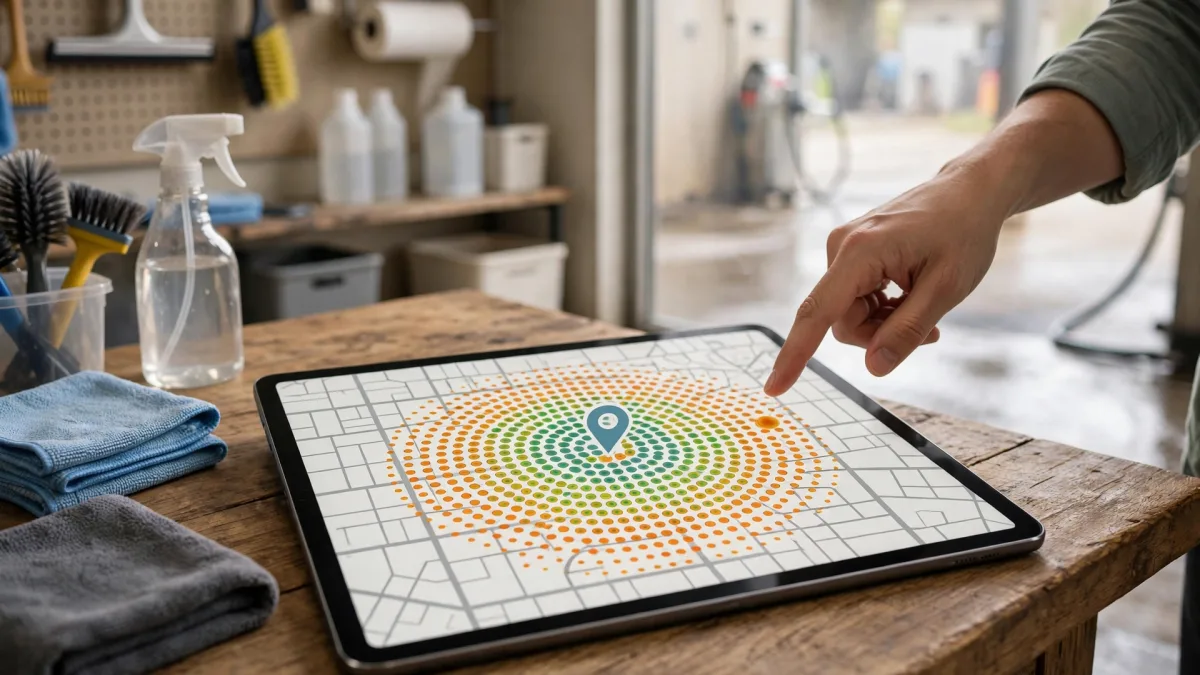
Images are AI-generated.
"Where do I rank on the map?" seems simple: open your phone, type your service, find yourself in the list. Yet a Google Maps ranking check done this way often misleads. A customer running the same search two streets away may see you in a very different spot, or not at all.
Here we explain why local results vary by person, why your own phone misleads, and how to measure your ranking from different points.
Why does everyone see different results?
On its help page about local ranking, Google says local results are based mainly on relevance, distance and prominence. Of these three, distance directly affects measurement: it's how far each business is from the searcher. On the same page, Google notes that when someone doesn't share their location, it uses what it knows of their location.
In practice, you don't have a single ranking on Google Maps. Each search is ranked by where the searcher is. You may appear near the top next to your business but near the bottom a few kilometers away. Other variables matter too:
- Search phrase: "dental clinic" and "pediatric dentist" bring different result lists.
- Time of search: Whether a business is open or closed at that moment, for example, can affect results.
- Competitors' locations: How many similar businesses surround the searcher determines your position at that point.
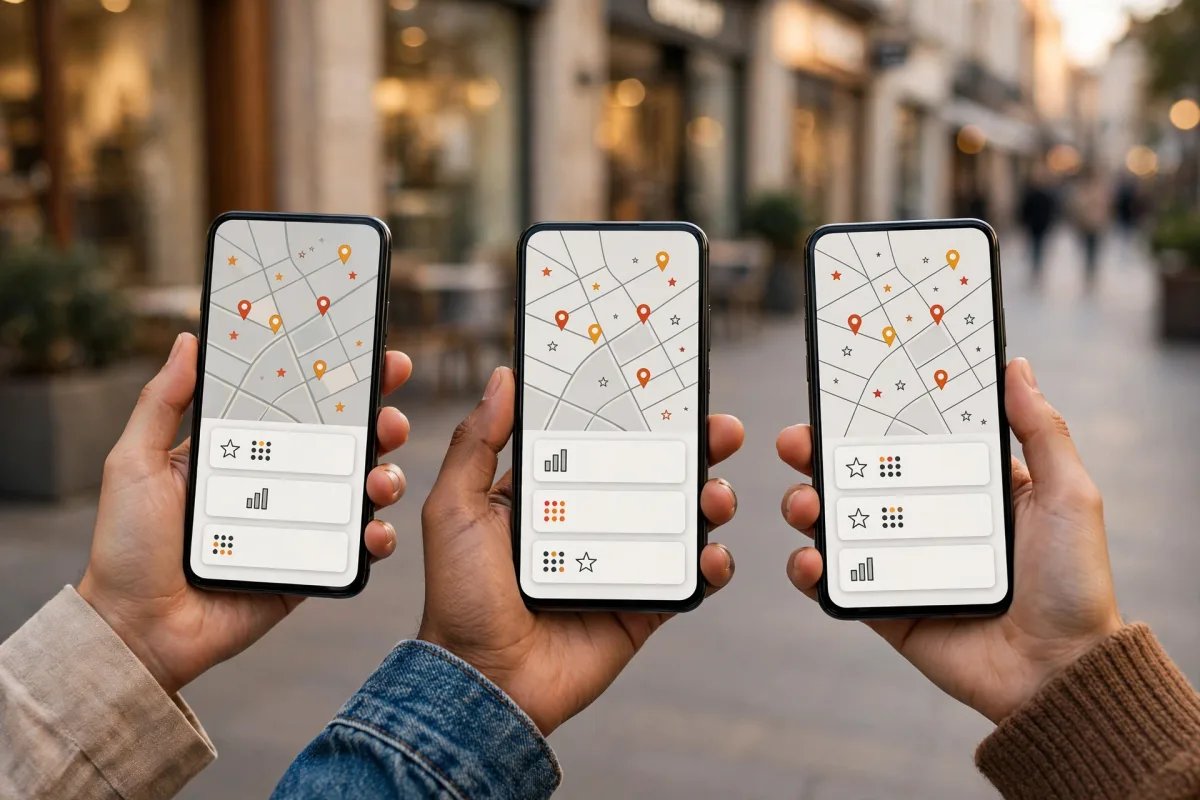
Why is checking from your own phone misleading?
Searching on your own phone is misleading in several ways:
- Your location is your business. You usually search from your shop or home. The point closest to your business shows you at your best; most of your customers search from elsewhere.
- One point, one moment. What you see in one look applies to that moment and place only. It may differ the next day or hour.
- Repeated searches. Searching for and clicking on your own business again and again isn't measurement. What you see may not match what your customer sees.
- One phrase. Most people check only one search phrase, while customers search for the same service in different words.
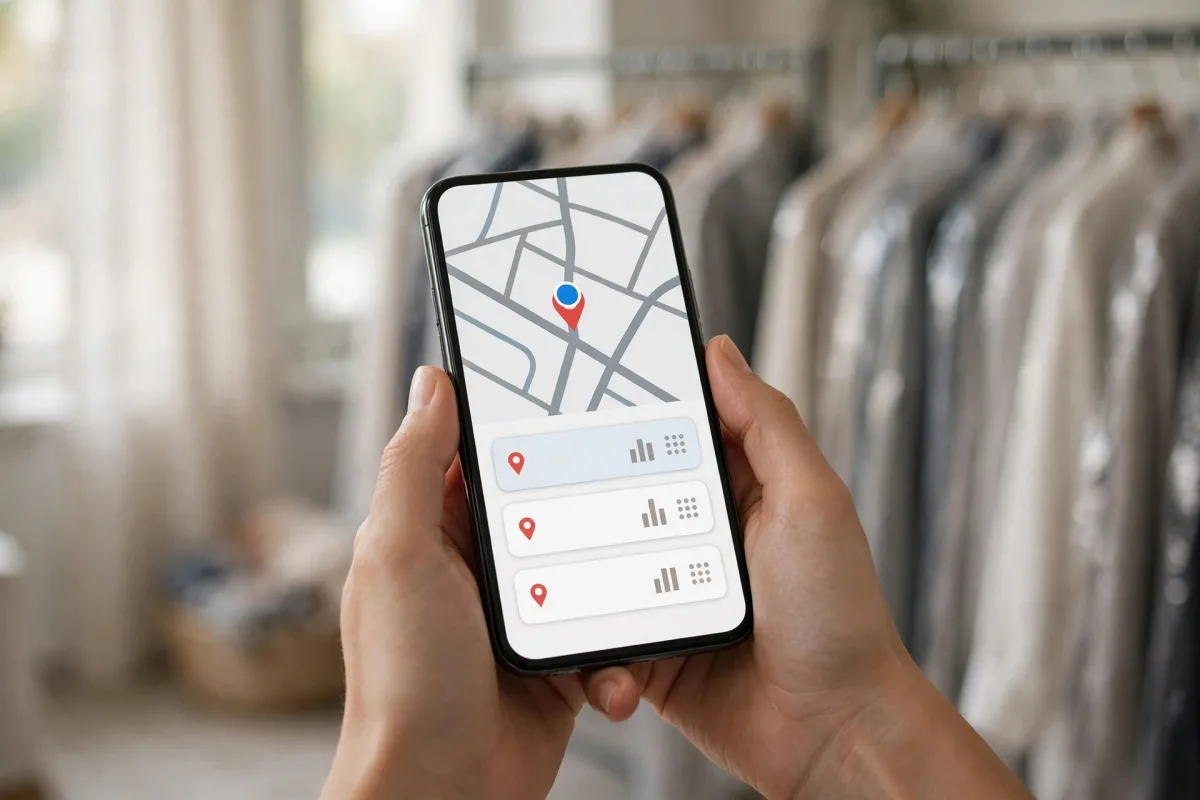
Measuring from different points: the grid approach
For a more realistic local ranking measurement, the same search is run from many points around your business. The most common method is an evenly spaced grid centered on it. For example, a 7×7 grid has 49 points and a 13×13 grid has 169. The same search is run at each point, and your rank there is recorded.
The result is usually shown as a heat map: points where you rank high in one color, points where you trail in another. At a glance, you see:
- Which neighborhoods you stand out in and which you fall behind in.
- How far your visibility reaches from your business.
- Where a competitor is ahead of you.
Which searches should you track?
The value of measurement depends on the search phrases you choose. These principles help:
- Use the customer's words. What you call a service and what a customer searches for may differ. Notice how customers describe your business on the phone or at the door.
- Choose service and category phrases. Phrases like "car wash", "breakfast place" or "pediatrician" are what new customers search for.
- Don't track your own name. Someone searching by your name already knows you; appearing at the top for that search is expected and says little about visibility.
- Choose few but well-chosen phrases. A few main service phrases are enough to start. Too many make tracking harder.
- Consider searches that include an area. Some customers search as "neighborhood name + service". These searches show how you appear in the areas you serve.
Measurement frequency and interpreting results
Rankings can change even within a day, so don't draw conclusions from a single measurement. These habits make measurement reliable:
- Regular intervals: Measuring the same phrase once or twice a week is enough for most businesses to see the trend.
- Same conditions: Use the same grid, the same radius and, if possible, similar hours when your business is open. A measurement taken at night or while you're closed may misstate your rank.
- Look at averages: Ups and downs in a single scan may just be fluctuation. Comparing the average of the last few scans with the few before is more reliable.
- Note changes: When you change profile information, add photos or receive many new reviews, note the date. It helps you interpret later differences.
- Account for the season: In some businesses, searches and competition change with the season; keep that in mind when comparing this month with last.
To see where you stand today, the free map analysis starts with a 25-point measurement, no sign-up required. For ongoing tracking, BadePlus's map rank tracking measures the keywords you choose on a 7×7, 9×9 or 13×13 grid, shows the result on a heat map and calculates change not from a single scan but by comparing the average of the last two scans with the two before.

Frequently asked questions
Why does my rank change every day?
Local results aren't fixed. Competitors' profile changes, new reviews, the time of the search and Google's own updates can shift rankings from day to day. Small shifts are normal; what's meaningful is change in the same direction over several weeks.
How can I check it myself without a tool?
It can be done, within limits. Ask acquaintances who live or work in different neighborhoods to search the same phrase on their phones and send you a screenshot. Save the screenshots with the date and neighborhood name. This isn't as detailed as a regular grid measurement, but it's far more realistic than checking only your own phone.
Does measuring make sense if I don't appear on the map at all?
Yes. Knowing where you don't appear is also baseline data. First make sure your profile is verified, your category is right and your information is complete; then repeat the same measurement at set intervals to track the change.
Summary
- You don't have a single ranking on Google Maps; results change with the location of the search.
- A search from your own phone, next to your business, doesn't show the real picture.
- With the grid method, the same search is run from many points and the result is read on a heat map.
- Track the service phrases your customers use; don't treat searches for your own name as a measure.
- Repeat measurements under the same conditions and look at the average of several scans, not a single one.